
Europe Summer Travel 2026: How to Survive Strikes, Border Delays & High Airfares
Planning a Europe trip in summer 2026? You’re not alone but this year, travel across Europe is far from normal. From ongoing airport strikes and airline disruptions to long immigration queues and rising ticket prices, travelers are facing a completely different experience compared to previous years.
But here’s the truth Europe is still very much open and your trip can still be incredible. You just need to plan smarter. In this detailed Govoygo we’ll break down everything you need to know to travel smoothly despite the chaos.
Europe Travel in 2026: What’s Really Happening?
Summer 2026 has turned into one of the most disrupted travel seasons in Europe in recent years. Multiple issues are happening at the same time, creating a ripple effect across the entire continent.
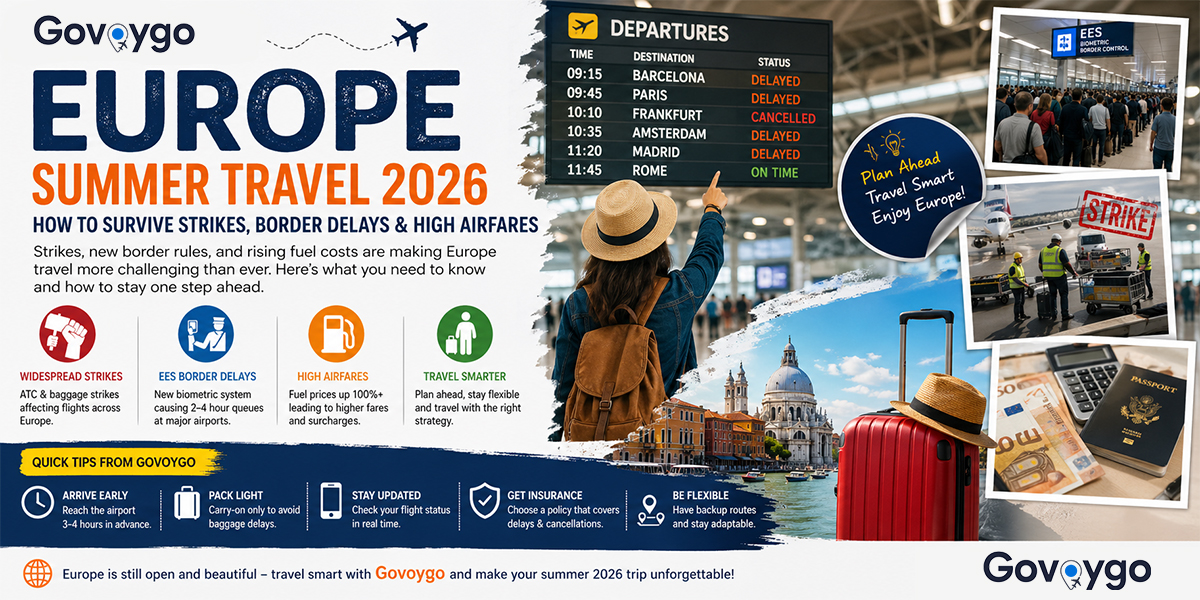
Labor strikes are one of the biggest problems. In Spain, air traffic controller strikes are affecting regional airports, causing frequent delays and cancellations. At the same time, baggage handler strikes at major airports are leading to long wait times and misplaced luggage.
Airlines are also under pressure. For example, Lufthansa has cut thousands of flights from its summer schedule, reducing availability and pushing ticket prices higher.
There are also infrastructure disruptions. Santiago de Compostela Airport is temporarily closed due to runway upgrades, forcing travelers to reroute their journeys.
All of this combined means one thing: even if your flight is not directly affected, delays are still very possible.
Govoygo Insight: Always check your flight status regularly and keep a backup plan ready.
EES Border System: Why Airport Queues Are So Long
Another major change in 2026 is the rollout of Europe’s new Entry/Exit System (EES). This system replaces manual passport stamping with biometric verification, including fingerprint and facial recognition.
While it’s designed to improve security the rollout hasn’t been smooth.
Major airports like Paris Charles de Gaulle Airport, Frankfurt Airport and Amsterdam Schiphol Airport are seeing delays of up to 2–4 hours at immigration.
For travelers coming from India or other non-EU countries this is unavoidable.
What you should do:
· Arrive at least 3–4 hours before your flight
· Keep documents ready and accessible
· Expect delays, especially at major hubs
Govoygo Tip: Consider flying into smaller airports where queues are shorter and processing is faster.
Why Flights to Europe Are So Expensive Right Now
If you’ve been searching for flights to Europe, you’ve probably noticed a sharp increase in prices. There are two main reasons behind this.
First, global fuel prices have surged and airlines are passing those costs on to passengers through higher fares and fuel surcharges.
Second airlines are operating fewer flights. For example, Air France-KLM and British Airways have added surcharges, while low-cost airlines like Ryanair and easyJet are reducing routes.
This combination of high demand and low supply has pushed ticket prices up by around 8–10%, and in some cases even more.
Interestingly, airlines like Emirates, Qatar Airways and Etihad Airways are still operating stable schedules, making them a reliable option although slightly more expensive.
Govoygo Tip: Use Govoygo to compare fares across airlines and find the best deals without compromising reliability.
Passenger Rights: What You Can (and Can’t) Claim
With so many disruptions, it’s important to understand your rights as a traveler.
Under European regulations, you may be eligible for compensation if your flight is canceled or delayed but only in specific situations.
If the issue is caused by the airline (like staff strikes or technical faults) you can receive compensation of up to €600.
However, if the disruption is caused by external factors like air traffic control strikes, airport staff issues or EES delays you won’t receive compensation. You will still be offered a refund or rebooking but no extra payment.
Govoygo Insight: Always confirm the reason for the delay before submitting a compensation claim.
Smart Travel Tips from Govoygo
Traveling smartly is the key to enjoying Europe in 2026. Here are some practical tips from Govoygo to help you avoid common travel headaches:
Plan Ahead with These Strategies
|
Tip |
Why It Helps |
|
Choose smaller airports |
Less crowd, faster immigration |
|
Travel with carry-on only |
Avoid baggage strike issues |
|
Arrive early (3–4 hours) |
Handle EES delays smoothly |
|
Avoid tight connections |
Reduce risk of missing flights |
|
Book flexible tickets |
Easy changes during disruptions |
|
Get travel insurance |
Protection against delays & cancellations |
Should You Still Travel to Europe This Summer?
The answer is simple yes.
Despite the disruptions, Europe remains one of the most beautiful and rewarding destinations in the world. The landscapes, culture, history and food are still waiting for you.
Yes, your journey might take longer. Yes, you might pay a little more. But with the right planning, your experience can still be smooth and memorable.
Final Thoughts: Travel Smarter with Govoygo
Travel in 2026 is not about avoiding challenges it’s about being prepared for them.
From strikes and delays to rising costs, Europe is going through a complex travel phase. But that doesn’t mean you should cancel your plans. Instead, adapt your strategy.
With the right planning and tools like Govoygo you can stay informed, compare flights easily, and make smarter travel decisions.
So go ahead plan your Europe trip with confidence. Just remember: in 2026 smart travelers win.