
Hong Kong Airport Terminal 2: Airlines, Check-in & Passenger Guide 2026
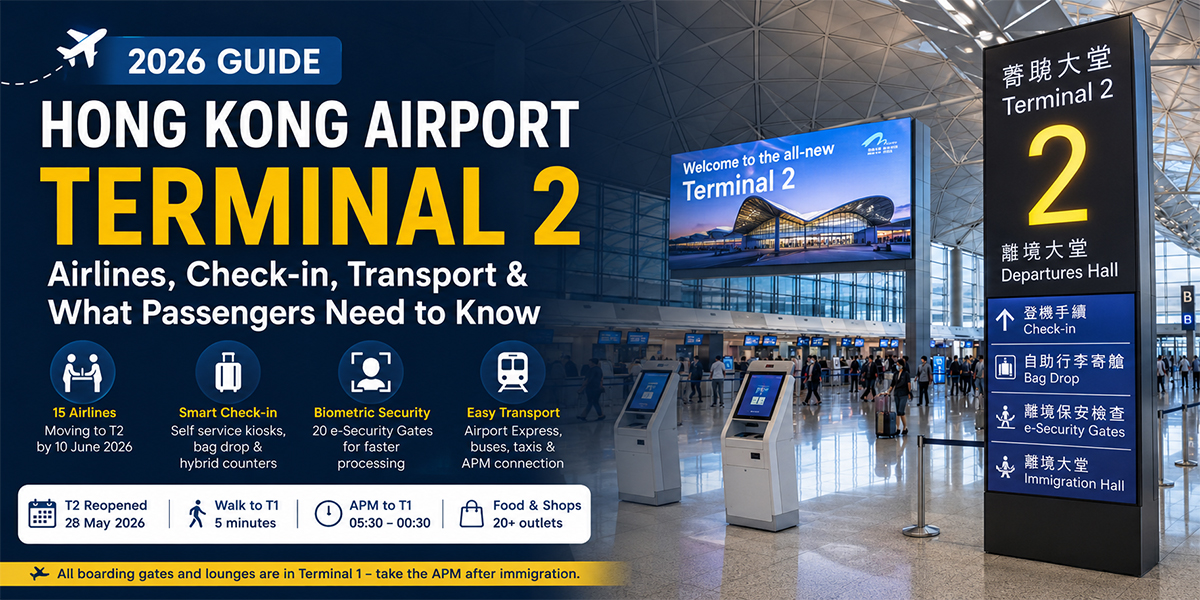
Hong Kong International Airport has officially reopened its rebuilt Terminal 2 departure facilities on 28 May 2026 marking one of the airport’s biggest upgrades in years. The modernized terminal introduces advanced biometric technology, expanded check-in areas, faster immigration processing and improved passenger convenience.
Over the next few weeks 15 airlines will gradually move their check-in operations from Terminal 1 to Terminal 2 with the transition expected to finish by 10 June 2026.
If you’re flying from Hong Kong soon, here’s everything you need to know before heading to the airport.
Table of Contents
- What’s New at Hong Kong Airport Terminal 2
- Key Features and Facilities
- Airlines Moving to Terminal 2
- Airline Relocation Timeline
- Check-in, Security & Immigration Process
- Step-by-Step Departure Guide
- Smart Check-in Services
- How to Reach Terminal 2
- Airport Express
- Airport Buses
- Taxi & Private Transfers
- Walking Between Terminals
- Dining, Shopping & Passenger Facilities
- Frequently Asked Questions
What’s New at Hong Kong Airport Terminal 2
After years of redevelopment, Terminal 2 has reopened as a state-of-the-art departure hub spanning more than 300,000 square meters. The original terminal closed in 2019 for major expansion work, and the new facility is expected to handle nearly eight million passengers annually during its first phase of operation.
The upgraded terminal focuses heavily on automation, smart travel technology, and smoother passenger movement.
Key Features and Facilities
Passengers departing from T2 can now access:
- Eight modern check-in aisles
- 108 hybrid check-in counters
- 68 automated self-bag-drop machines
- 58 smart self-service kiosks
- 20 biometric e-Security Gates using facial recognition
- 35 automated immigration e-Channels
- 60 staffed immigration counters
- Eight food and beverage outlets, including four operating 24/7
- Twelve retail stores and travel shops
- Direct links to Terminal 1 and the Airport Express station via the Automated People Mover (APM)
According to the Hong Kong Airport Authority the new biometric systems can reduce departure processing time by nearly 25% with facial-recognition security clearance taking less than seven seconds for eligible travelers.
Which Airlines Are Moving to Terminal 2?
Fifteen airlines — mainly regional and short-haul carriers — are shifting their check-in operations from Terminal 1 to Terminal 2 in multiple phases through June 2026.
Airline Relocation Timeline
|
Phase |
Airline |
Move to T2 |
|
Phase 1 |
28 May 2026 |
|
|
Phase 2 |
3 June 2026 |
|
|
Phase 3 |
10 June 2026 |
|
|
Phase 4–7 |
AirAsia, Cebu Pacific, IndiGo, VietJet, Bangkok Airways & others |
Early–Mid June 2026 |
Selected flights operated by Cathay Pacific are also expected to move to Terminal 2.
However, most long-haul international airlines — including Singapore Airlines and Emirates — will continue operating from Terminal 1.
Passengers are strongly advised to check their airline app, booking confirmation or boarding pass before arriving at the airport.
Check-in, Security & Immigration at Terminal 2
For airlines operating from T2 the entire departure journey now takes place inside Terminal 2 before passengers transfer to boarding gates in Terminal 1.
Step-by-Step Departure Process
- Arrive at Terminal 2 and complete check-in
- Use self-service kiosks, bag-drop counters, or staffed check-in desks
- Proceed through biometric e-Security Gates
- Complete immigration clearance at T2’s dedicated immigration hall
- Take the Automated People Mover (APM) to Terminal 1 for boarding
The APM operates daily from 05:30 AM to 12:30 AM and connects both terminals within minutes.
Smart Check-in Services
The new smart check-in system allows travelers to:
- Print boarding passes
- Tag luggage independently
- Drop bags without staff assistance
- Use facial recognition for faster screening
These upgrades are especially useful during peak travel periods and holiday seasons.
Passengers who prefer traditional service can still use the hybrid check-in counters staffed by airline personnel.
How to Reach Terminal 2 Hong Kong Airport
Terminal 2 is fully integrated into Hong Kong International Airport’s transportation network, making access easy for both local and international travelers.
Airport Express
The Airport Express remains the fastest option from central Hong Kong.
Travel time from Hong Kong Station to the airport is approximately 24 minutes. Train doors now open on both sides — one side for Terminal 1 and the other directly for Terminal 2 departures.
Airport Buses
Citybus and Long Win Bus services now include Terminal 2 stops on:
- 29 daytime A-Route buses
- 17 overnight NA-Route buses
Most buses stop at Terminal 1 first before continuing to T2 so passengers should remain onboard until the second airport stop.
Taxi & Private Transfers
Terminal 2 features its own dedicated:
- Taxi drop-off zone
- Ride-hailing pickup area
- Private car access point
- Cross-boundary coach terminal for Greater Bay Area travel
Walking Between Terminals
A covered pedestrian bridge connects Terminal 1 and Terminal 2 on the landside level.
Walking time between terminals is around five minutes before security clearance.
Food, Shopping & Passenger Facilities
Terminal 2 currently offers around 20 dining and retail outlets for travelers.
Popular food options include:
- McDonald’s
- Nap Tea
- Imperial Patisserie
Four restaurants operate 24 hours a day, making them ideal for late-night and early-morning flights.
Retail stores focus mainly on:
- Travel essentials
- Souvenirs
- Snacks and convenience shopping
Passengers should note that lounges, boarding gates and duty-free shopping remain located in Terminal 1. After completing security and immigration at T2 travelers must take the APM to access airside facilities in T1.
The massive “11 Skies” retail and entertainment complex beside Terminal 2 is expected to open gradually from 2028 onward.
Frequently Asked Questions
Is Terminal 2 open at Hong Kong Airport?
Yes. Terminal 2 officially reopened its departure facilities on 28 May 2026 with airline relocations continuing through 10 June 2026.
Which airlines use Terminal 2?
Airlines moving to T2 include:
- Hong Kong Airlines
- HK Express
- Greater Bay Airlines
- AirAsia
- Cebu Pacific
- IndiGo
- VietJet
- Bangkok Airways
Some Cathay Pacific flights may also operate from T2.
How do I travel between Terminal 2 and Terminal 1?
Passengers can use the Automated People Mover (APM) after immigration and security. Before security clearance, travelers may also walk between terminals using the covered footbridge.
Does Terminal 2 have immigration clearance?
Yes. Terminal 2 includes its own immigration hall with:
- 35 automated e-Channels
- 60 staffed immigration counters
Can I use Airport Express for Terminal 2?
Yes. Airport Express trains now provide direct access to both terminals. Exit on the Terminal 2 side for immediate access to departures.
Sources
1. Hong Kong Airport Authority — Terminal 2 Departure Facilities Press Release
2. Hong Kong Airport Authority — Airline Relocation Schedule Press Release
3. Hong Kong Airport Authority — HKIA Unveils New Terminal 2 Press Release
4. AeroTime — Hong Kong Airport Opens Terminal 2 With 15 Airlines Set to Relocate
5. VisaHQ — Hong Kong Airport Transport Playbook for T2 Reopening
6. VisaHQ — Terminal 2 Begins Operations
7. Time Out Hong Kong — Essential Guide to the New Terminal 2
Disclaimer: Govoygo strives to ensure all information presented in this article is accurate and up to date at the time of publication. Travel policies, prices, visa requirements and conditions can change rapidly. We strongly recommend verifying critical details with official sources before making travel decisions. Govoygo does not accept liability for any inaccuracies, oversights, or changes that may occur after publication.